
When I first heard the words “scleral shell,” I didn’t know what to expect. I’d never heard of one before, and the idea of putting something in my eye—especially after everything I’d just been through—felt a bit surreal. But now, having lived with mine for a few months, I can honestly say it’s been one of the most surprisingly positive parts of this journey.
So, for anyone curious, anxious, or simply nosey (I would’ve been all three!), here’s a real, no-fluff account of what the process is like, how it feels, and what I’ve learned.

First things first: What is a scleral shell?
A scleral shell is a type of prosthetic eye designed to cover a damaged or shrunken eye, rather than replace it entirely. I have a tiny, shrunken eyeball still in place, and the shell sits over it like a smooth, protective cover. It’s custom-made to match your existing eye, and the result is honestly amazing.
How do you get one if you’re in the UK?
I was referred by my ophthalmologist to NAES—the National Artificial Eye Service—in late September, the referral process was quicker than I expected. I had my first consultation in November, so the wait was approximately 2 months. That initial appointment was to check whether a prosthetic would work for me. It did (hooray!), so a few weeks later, I went back to have my eye moulded.
From there, it took around 12 weeks for the finished shell to be made and fitted. Christmas landed right in the middle of that, so it might be even quicker without the festive delay. I’m based in Devon—wait times might vary depending on where you are. If you’re not under an ophthalmologist at the moment, I’ve been told a GP can also refer you.
More info here if you’re looking: https://www.naes.nhs.uk
Bonus: the NHS provides one matching eye for free. They also offer “fun” eyes that they can make from the same mould at a reasonable cost.
Here is my video showing exactly what its like to put in and the difference it makes between being in and out:
Answering some common questions about having a scleral shell (prosthetic eye) fitted
As you probably know, I’ve been openly sharing my sight loss journey since my accident, and when I got my new eye I had lots of questions. Here are some of the most common ones answered:
How does the fitting process work?
The fitting process for a scleral shell (prosthetic eye) in the UK typically starts with a referral from your ophthalmologist to a specialist clinic, such as the National Artificial Eye Service (NAES). Once referred, you’ll have an initial consultation to assess whether a prosthetic is suitable for you. During this appointment, the specialist will examine your eye socket and determine the best course of action. Afterward, a mould of your eye socket will be taken, which is then used to create a custom-made scleral shell that fits comfortably over the remaining eye tissue. The process usually takes around 12 weeks, including a couple of follow-up visits to check the fit and make any necessary adjustments. The shell itself is designed to feel natural and can be worn comfortably with proper care. It’s a gradual process, and patients are encouraged to slowly increase the wear time, working up to wearing the shell for a full day. With regular maintenance and follow-up appointments, the scleral shell becomes an integral part of the eye’s appearance and function.
Here are a few pics showing me going through this journey…

Does it hurt to wear? Is it uncomfortable?
Honestly? No. In fact, it actually feels better with it in.
Before the shell, my eye was achey and scratchy a lot of the time. It turns out the damaged surface of my eye was irritating the inside of my eyelid. Now, with the smooth shell acting like a buffer between the two, that scratchiness has completely disappeared.
It can get a little dry now and then, especially after a long day, but I use lubricating drops and that keeps everything feeling comfortable. Think of it like wearing a contact lens—if you’ve ever worn one, the sensation is kind of similar. After a few days of wearing it for short periods, I built up to 6–8 hours easily. These days I wear it all day and only take it out before bed.
This is the lubricating product I am currently using – it seems to work really well.
I pop 2 drops into my eye just before inserting the shell and this lasts me most of the day.
(And yes, that feeling of taking it out at the end of the day is exactly like taking off your bra after hours—utter relief and a deep sigh included.)
Is it hard to put in and take out?
Nope! It’s super simple. Just like a contact lens. I clean it with soap and water before putting it in and again after taking it out, and that’s it. No faffing. No special solution. I was amazed at how low-maintenance it is.
Does it affect tears or make your eye water more?
I worried about this too, as my eye is pretty watery anyway. But it hasn’t caused any issues. In fact, tears are helpful—they keep the shell moist and comfortable. The shell doesn’t block them or interfere with tear production. Everything works just as it should.
Do you sleep with it in?
No I take it out at night as advised.
What about appearance—can people tell?
This was probably one of my biggest fears. Would people stare? Would I look obviously different? Would it make me feel more self-conscious?
And here’s the lovely truth: most people can’t even tell. I met someone recently and when I told her, she genuinely had to ask which eye it was. That moment gave me such a deep sense of comfort and confidence. It’s not just about appearances—it’s about feeling like me again.
Final thoughts: this is far more than just a prosthetic
For me, this hasn’t just been about restoring symmetry or reducing discomfort. It’s also been deeply emotional. The shell gave me back a sense of self. A piece of wholeness I didn’t know I’d lost. It allowed me to look in the mirror and feel less haunted by trauma and more… me. Still changed, still on a journey—but more grounded in my skin.
If you’re considering a scleral shell, or you’re just at the beginning of this road and feeling unsure—I hope this helps. I know how overwhelming and unknown it all can feel. But I promise, it’s not as scary as it sounds. It’s one of the kindest, most surprising parts of this wild, hard, beautiful healing process.
And if you have more questions or just need someone to talk to who’s been there, I’m always happy to chat. You’re not alone.
Let’s do this together. If you’re navigating something similar, or considering trying to get a new eye of your own, please feel free to reach out and ask everything you need to. I’d love to support you and put your mind at ease.
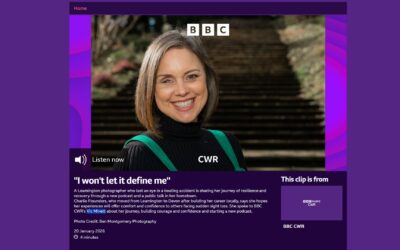
If you’re new here, I’m Charlie — a creative, speaker, educator and storyteller, using my lived experience of sight loss and facial difference to inspire courage, spark conversation, and show what’s possible beyond adversity.
I’M HERE TO MAKE A DIFFERENCE!
I help others find their voice, reclaim their confidence, and build powerful lives and businesses through creativity, visibility and truth-telling. Whether I’m behind the camera, in front of an audience, or leading a workshop, I’m here to prove that even after the unthinkable… your story isn’t over — in fact, it might just be beginning.
Please get in touch to discuss how we can make this work for you.